Paradise Regeneration: Heritage Loss and Stewardship
After total loss, what remains to conserve is often not fabric but significance: the cultural landscape, social fabric, and sense of place a community holds. This plan treats recovery as an act of heritage stewardship.
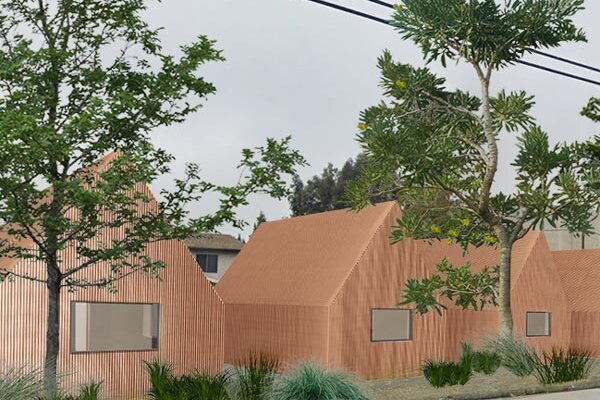
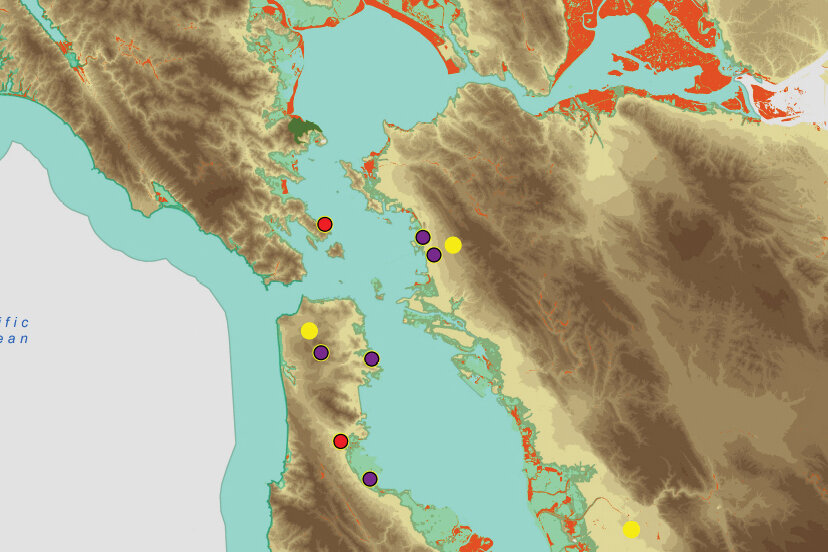
The project reimagines the heart of Paradise, CA in the wake of the devastating 2018 Camp Fire. Guided by resilience, the design proposes a new framework for housing, commerce, and gathering that restores both the physical fabric of the town and the sense of belonging that was lost, while mitigating future wildfire risk.
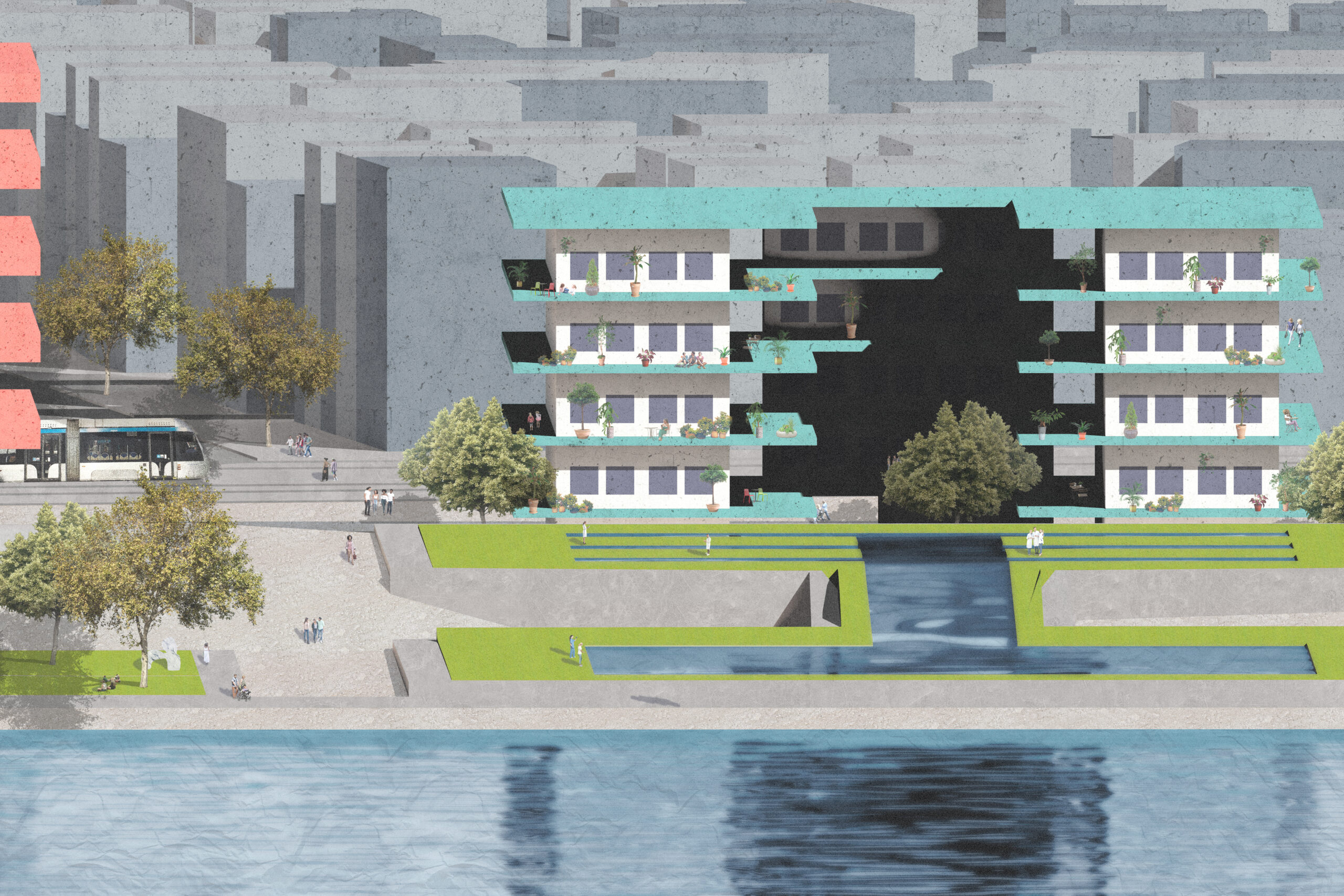
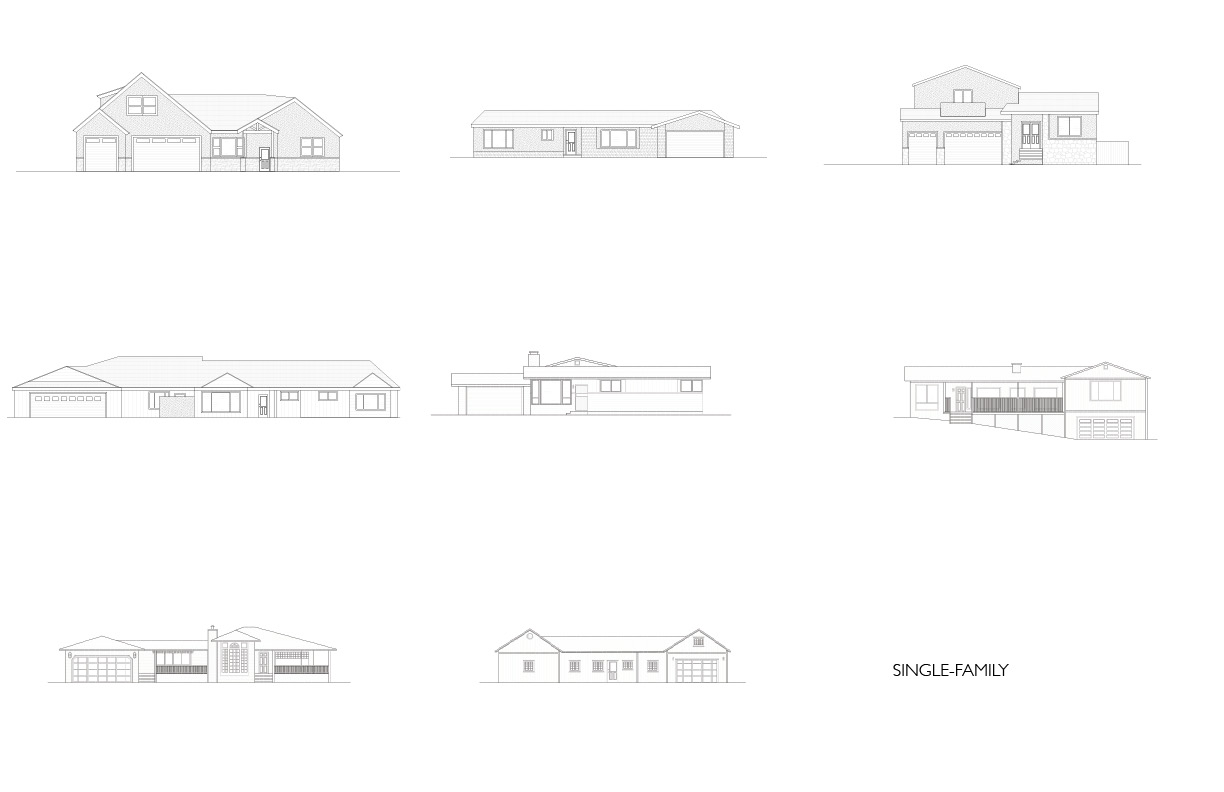
Elevations document existing residential, mobile, and commercial buildings, serving as a record of the town’s architectural fabric prior to and after the 2018 Camp Fire. By analyzing these structures—their forms, materials, and vulnerabilities—the project situates new proposals within the lived reality of Paradise, ensuring that strategies for recovery respond directly to the conditions on the ground.
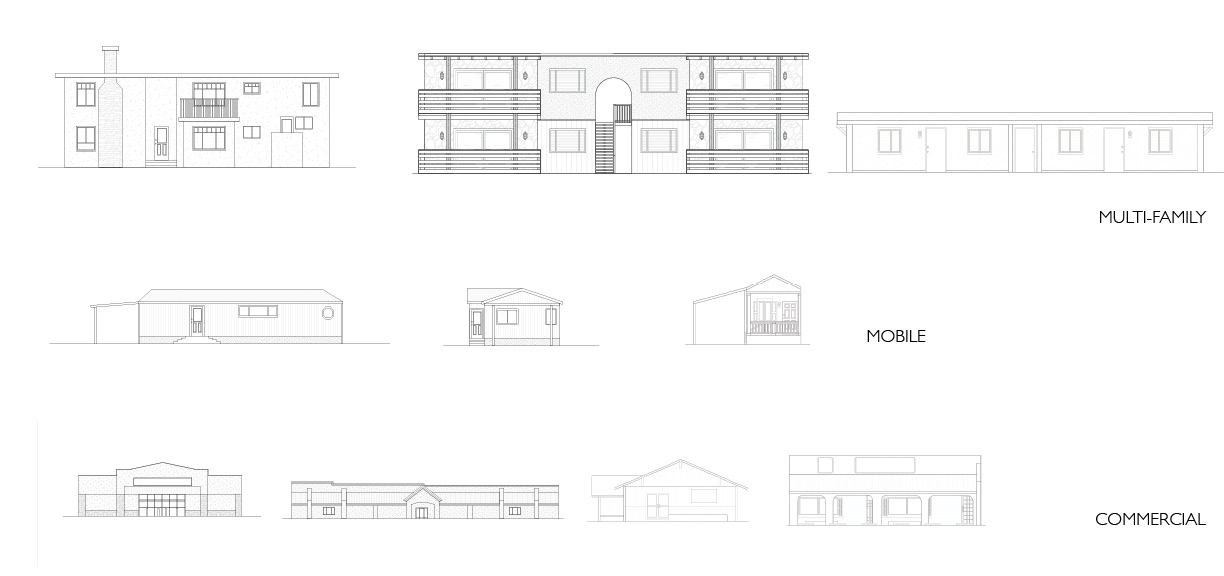
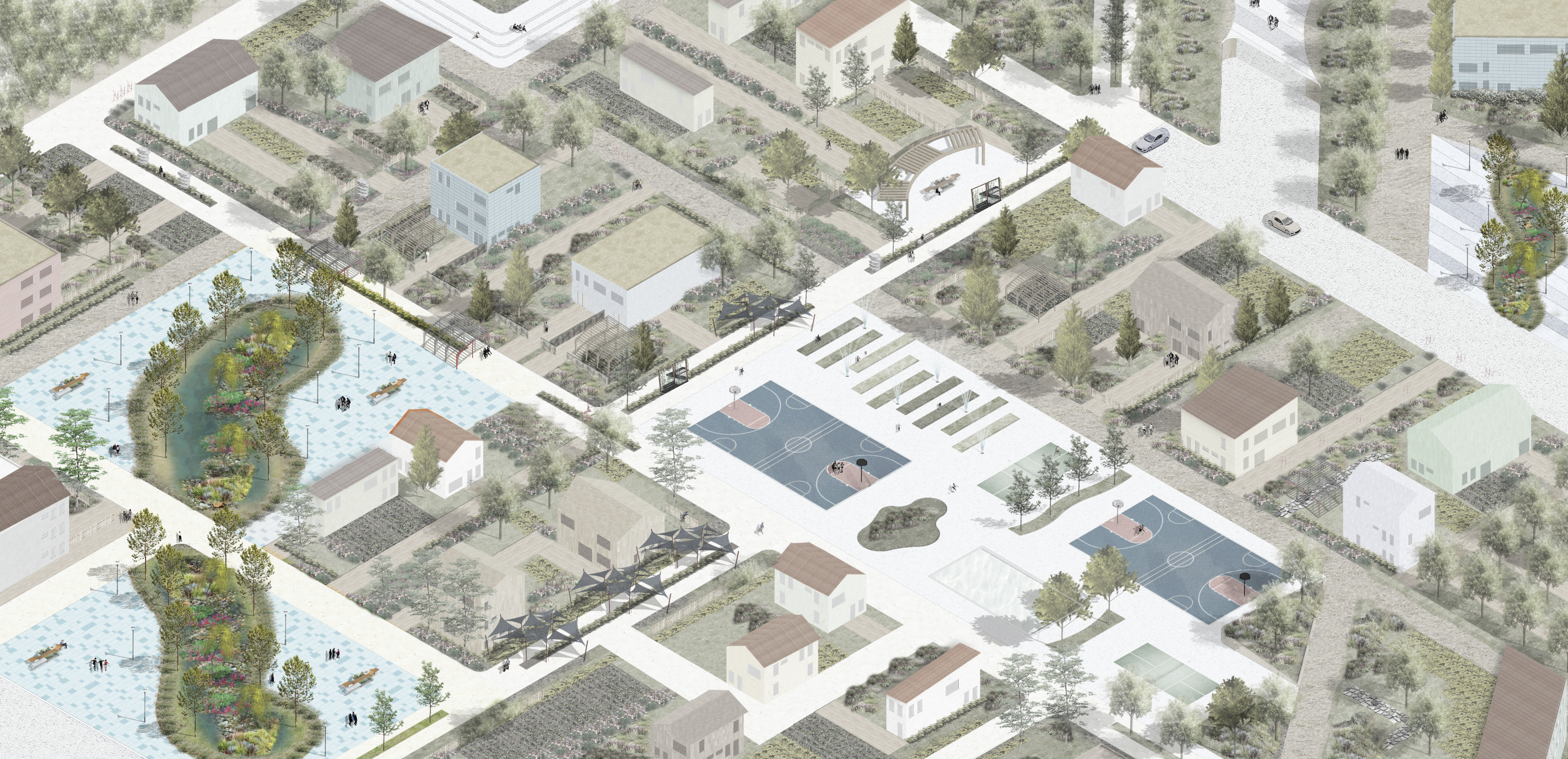
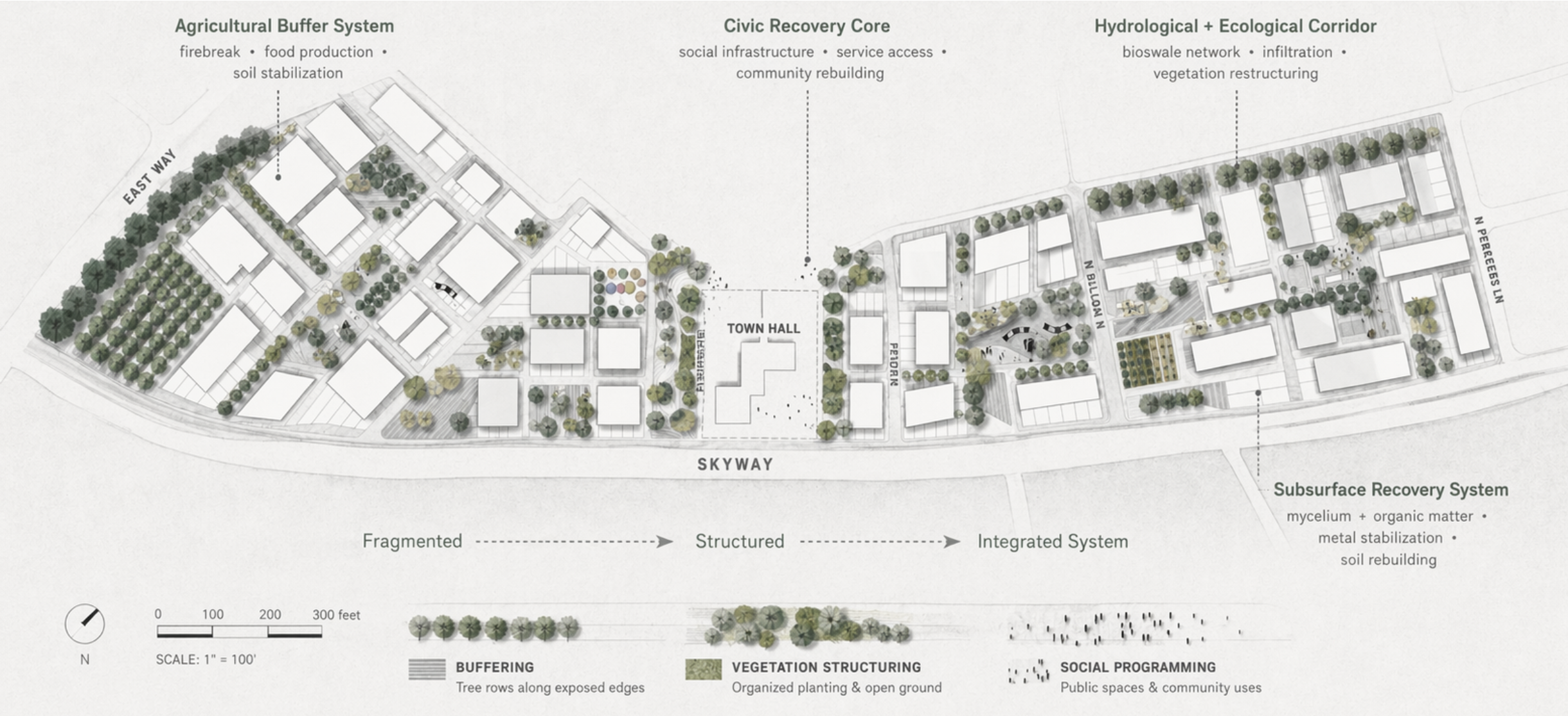
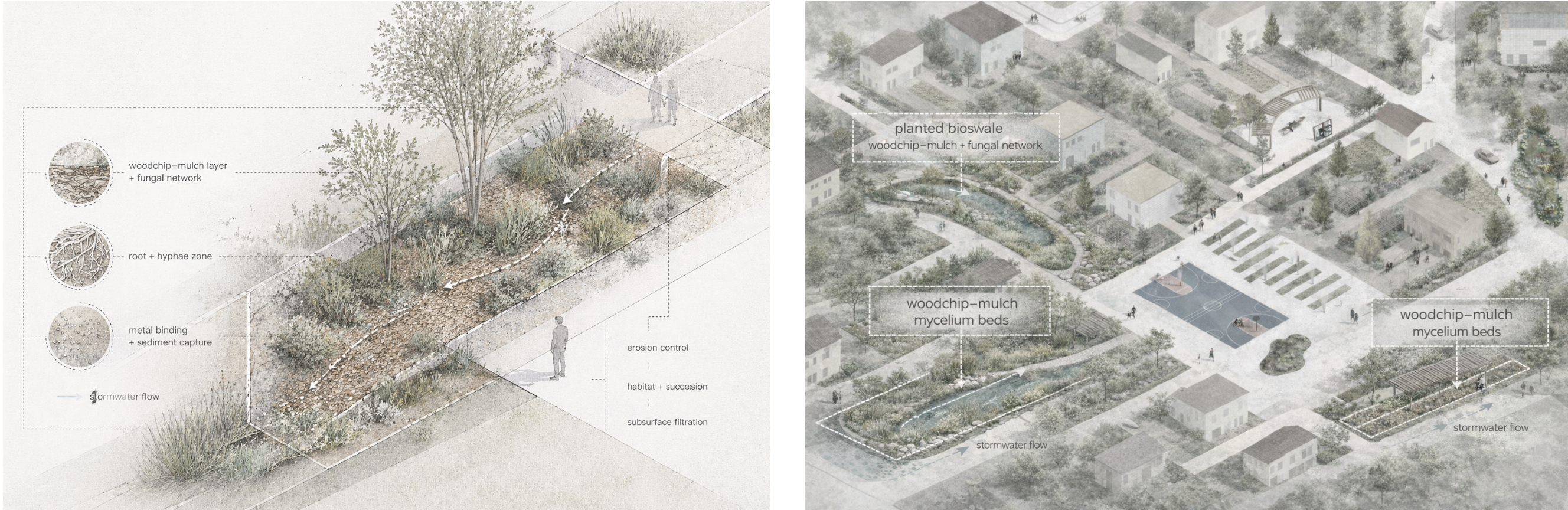
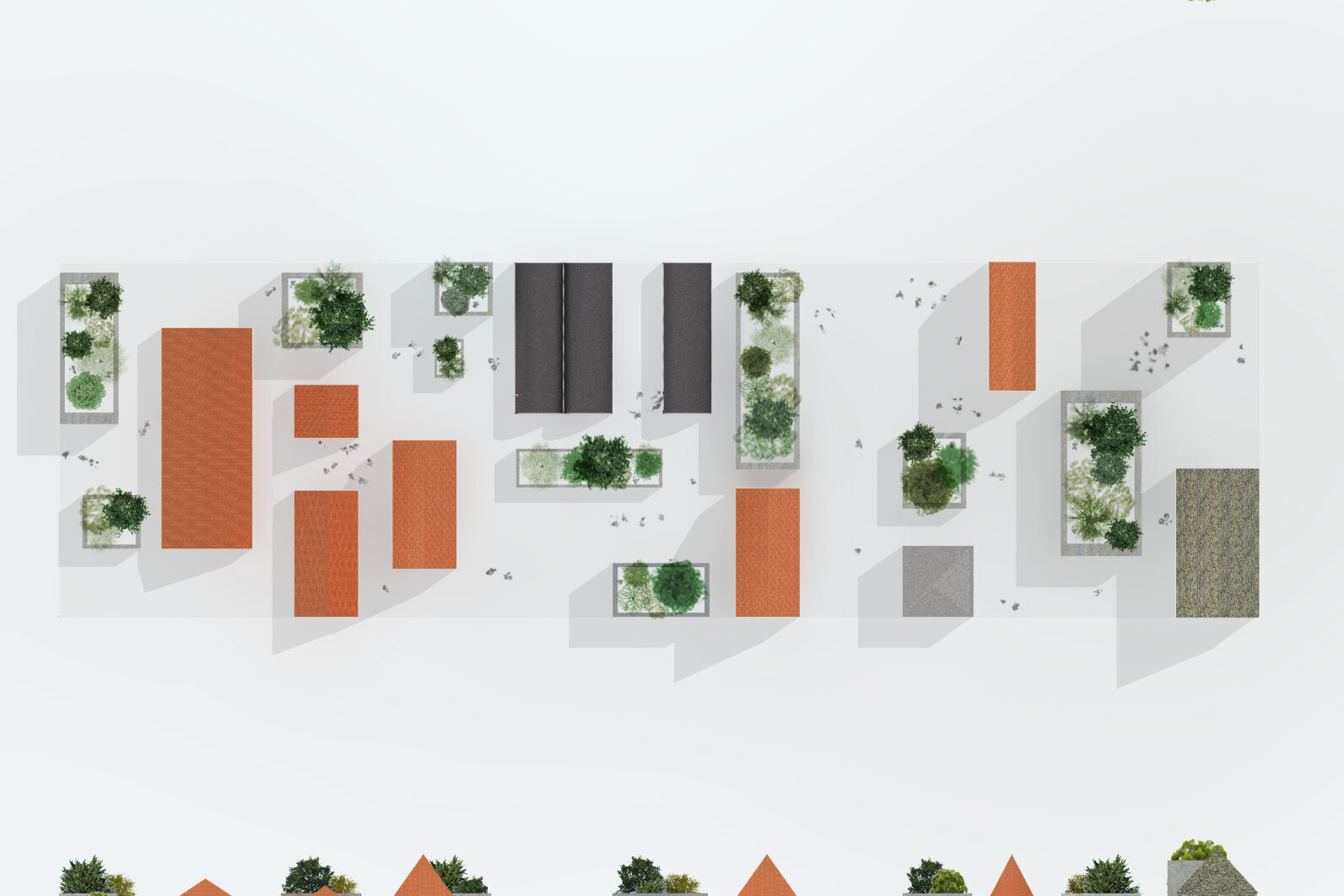
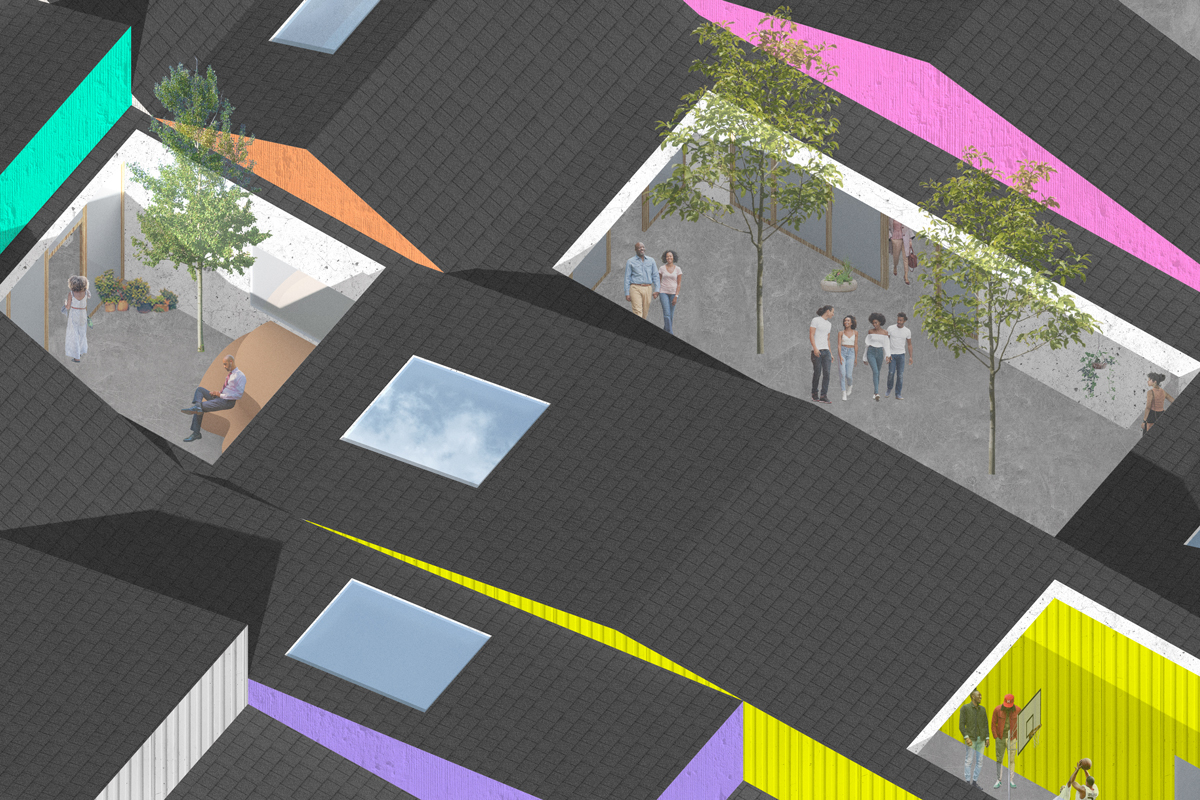
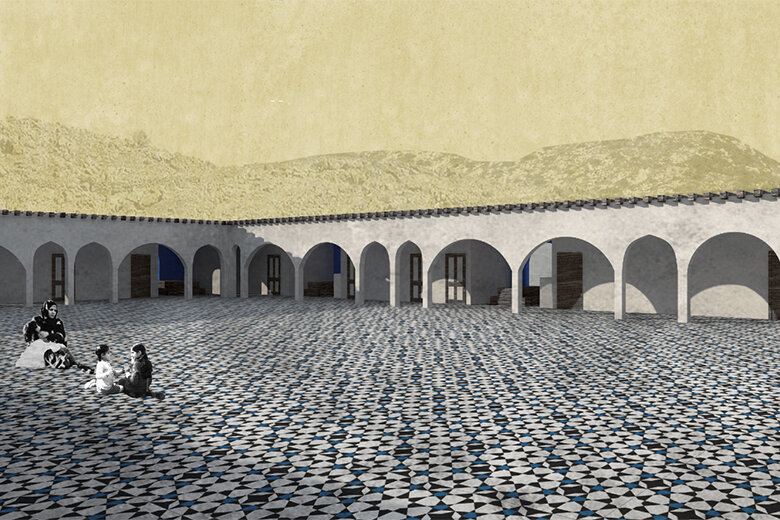
The site chosen in Phase 1 establishes a network of shaded streets, riparian corridors, and green infrastructure that weave resilience directly into daily life. Housing types range from single-family homes to mobile units and multifamily dwellings, ensuring flexibility and affordability for residents at different stages of recovery. Commercial blocks anchor the plan with opportunities for local business revival, while civic spaces—including a town hall and plazas—become sites of remembrance, collaboration, and celebration.
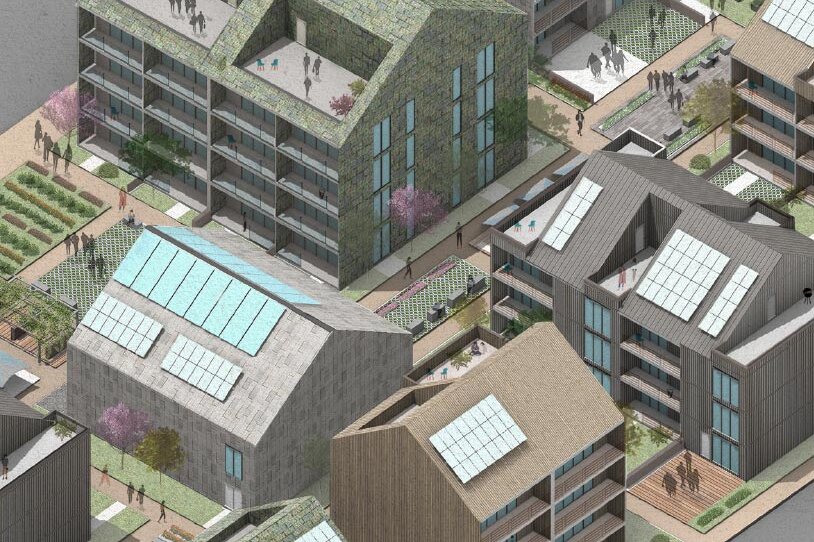
Architectural strategies prioritize fire-resilient materials, defensible space, and adaptable building types that can withstand future risk while fostering a renewed architectural identity for Paradise. The axonometric view captures the layered approach: resilient infrastructure, diverse housing, and landscapes designed for both ecological repair and human connection.